University of Wisconsin Logo
University of Wisconsin Mark

All In Wisconsin

  • Our Impact
  • About Us
  • Faculty & Staff
  • News
Search Icon
Universities of Wisconsin Constellation
Browse all sites
  1. Universities of Wisconsin
  2. All In Wisconsin
  3. Campus Stories
  4. Pioneer Farm research team zeros in on soil runoff, erosion and nutrient loss in dairy project

Pioneer Farm research team zeros in on soil runoff, erosion and nutrient loss in dairy project

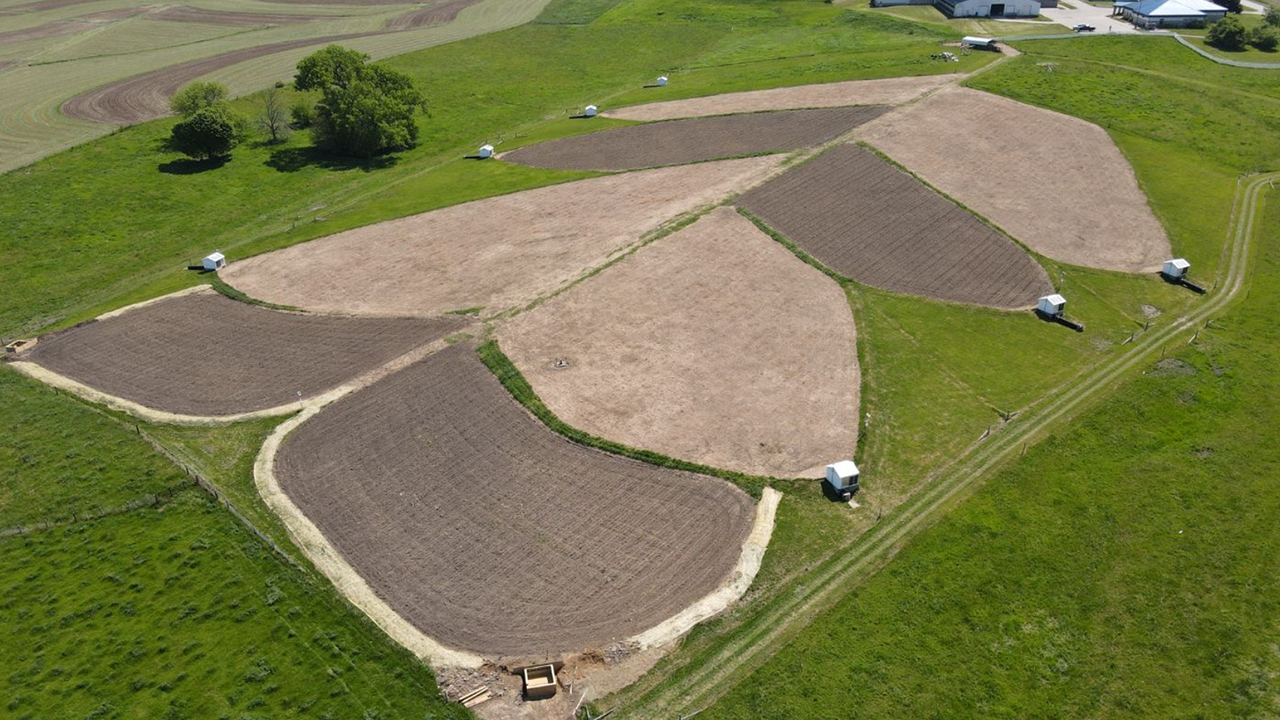
Photo: The trials at Pioneer Farm are being conducted in eight replicated catchments, or sections of fields where water flows downhill to a single collection point.

Research taking place at the University of Wisconsin-Platteville is contributing to a better understanding of the effects of dairy farming practices aimed at building healthier soils, with the team recently sharing an update on the ongoing work.

A team at UW-Platteville’s Pioneer Farm led by Dr. Dennis Busch, senior scientist, wrapped up the third year of research at the end of 2025. UW-Platteville is one of eight research institutions across the country participating in an six-year project called Dairy Soil & Water Regeneration, initiated by Dairy Management Inc. in collaboration with the Soil Health Institute to advance progress toward the dairy industry’s collective 2050 environmental stewardship goals.

Overall, the project is studying soil health and manure management and their effects on greenhouse gas emissions, water quality improvement and agronomic factors such as yield and quality of crops grown for dairy cattle feed.

Busch’s team is evaluating two dairy-focused crop production systems — one a conventional approach with commonly used farming practices, the other using Soil Health Management System (SHMS) practices.

The commonly used treatments are defined by conventional tillage, injected liquid dairy manure and commercial nutrients that are applied as required. In contrast, SHMS is a holistic approach that combines reduced soil disturbance by practicing no-till crop production, utilizing a novel manure-based fertilizer product and establishing cover crops, which are planted to cover the soil after the corn is harvested.

“We are evaluating the impact of these production systems on soil health, water quality, carbon storage and crop yield,” Busch said.

The trials at Pioneer Farm are being conducted in eight replicated catchments, or sections of fields where water flows downhill to a single collection point. The catchments are hydrologically isolated and use surface-water runoff gauges and soil core lysimeters, which measure the movement of water and nutrients in the soil.

Busch shared an update on the project:

What’s happening now: It was a busy fall. In September, we measured forage yield, harvested corn silage, collected silage samples, applied liquid dairy manure to the conventional plots and drilled cover crops in the SHMS plots. We also continue to collect water samples from our network of soil lysimeters each month and measure carbon dioxide soil emissions every two weeks.

General findings to date: Preliminary data indicate there is no significant difference in corn silage yield between the two production systems. However, the SHMS plots show significantly less surface water runoff, soil erosion and nutrient loss than the conventional system. For example, in 2025, surface water runoff from conventional plots was 0.94 inch compared with 0.08 inch from SHMS plots. In the same year, total phosphorus measured in runoff from conventional plots was 1.4 pounds per acre compared with 0.05 pounds per acre from SHMS plots. Soil erosion from conventional plots averaged 1,500 pounds per acre, significantly higher than the 27 pounds per acre measured in the SHMS plots.

Key success: Monitoring surface water runoff at the edge of the field requires dedication. The timing of events is unpredictable; they frequently occur in the evening or on weekends. Our success in collecting this data relies on having staff on call 24/7 to monitor events and troubleshoot equipment as needed. We are fortunate to have dedicated staff and students who are highly skilled and dependable in monitoring runoff events.

For more information, visit: Dairy Soil & Water Regeneration


Written by Jamie Mara

Link to original story: https://www.uwplatt.edu/news/pioneer-farm-research-team-zeros-soil-runoff-erosion-and-nutrient-loss-dairy-project

Recents
  • Pioneer Farm research team zeros in on soil runoff, erosion and nutrient loss in dairy project

    Thursday, January 29, 2026

  • UW-Parkside to add Women’s Flag Football, first NCAA university in Wisconsin to offer scholarships

    Wednesday, January 28, 2026

  • UW-Milwaukee professor uses sport psychology research to solve real-world problems

    Tuesday, January 27, 2026

Recents
Yearly
  • 2026
  • 2025
  • 2024
  • 2023
  • 2022
  • 2021
  • 2020
  • 2019
  • 2018
  • 2017
  • 2016
  • 2015
  • 2014
  • 2013
  • 2012
Monthly
  • January 2026
  • December 2025
  • November 2025
  • October 2025
  • September 2025
  • August 2025
  • July 2025
  • June 2025
  • May 2025
  • April 2025
  • March 2025
  • February 2025
  • January 2025
  • December 2024
  • November 2024
  • October 2024
  • September 2024
  • August 2024
  • July 2024
  • June 2024
  • May 2024
  • April 2024
  • March 2024
  • February 2024
  • January 2024
  • December 2023
  • November 2023
  • October 2023
  • September 2023
  • August 2023
  • July 2023
  • June 2023
  • May 2023
  • April 2023
  • March 2023
  • February 2023
  • January 2023
  • December 2022
  • November 2022
  • October 2022
  • September 2022
  • August 2022
  • July 2022
  • June 2022
  • May 2022
  • April 2022
  • March 2022
  • February 2022
  • January 2022
  • December 2021
  • November 2021
  • October 2021
  • September 2021
  • August 2021
  • July 2021
  • June 2021
  • May 2021
  • April 2021
  • March 2021
  • February 2021
  • January 2021
  • December 2020
  • November 2020
  • October 2020
  • September 2020
  • August 2020
  • July 2020
  • June 2020
  • May 2020
  • April 2020
  • March 2020
  • February 2020
  • January 2020
  • December 2019
  • November 2019
  • October 2019
  • September 2019
  • August 2019
  • July 2019
  • June 2019
  • May 2019
  • April 2019
  • March 2019
  • February 2019
  • January 2019
  • December 2018
  • November 2018
  • October 2018
  • September 2018
  • August 2018
  • July 2018
  • June 2018
  • May 2018
  • April 2018
  • March 2018
  • February 2018
  • January 2018
  • December 2017
  • November 2017
  • October 2017
  • September 2017
  • August 2017
  • July 2017
  • June 2017
  • May 2017
  • April 2017
  • March 2017
  • February 2017
  • January 2017
  • December 2016
  • November 2016
  • October 2016
  • September 2016
  • August 2016
  • July 2016
  • June 2016
  • May 2016
  • April 2016
  • March 2016
  • February 2016
  • January 2016
  • December 2015
  • November 2015
  • October 2015
  • September 2015
  • August 2015
  • July 2015
  • June 2015
  • May 2015
  • April 2015
  • March 2015
  • February 2015
  • January 2015
  • December 2014
  • November 2014
  • October 2014
  • September 2014
  • July 2014
  • June 2014
  • May 2014
  • April 2014
  • March 2014
  • January 2014
  • December 2013
  • November 2013
  • October 2013
  • September 2013
  • August 2013
  • July 2013
  • June 2013
  • May 2013
  • April 2013
  • March 2013
  • February 2013
  • January 2013
  • December 2012
  • November 2012
  • October 2012
Universities
  • Freshwater Collaborative of Wisconsin
  • Universities of Wisconsin
  • UW Colleges
  • UW Extended Campus
  • UW-Eau Claire
  • UW-Extension
  • UW-Green Bay
  • UW-La Crosse
  • UW-Madison
  • UW-Milwaukee
  • UW-Oshkosh
  • UW-Parkside
  • UW-Platteville
  • UW-Platteville; UW-La Crosse
  • UW-River Falls
  • UW-Stevens Point
  • UW-Stout
  • UW-Superior
  • UW-Whitewater
Categories
  • Community
  • Economy
  • Research & Innovation
Universities of Wisconsin
Facebook Icon X Icon LinkedIn Icon Instagram Icon YouTube Icon
Office of Public Affairs, Communications, and Branding
Madison, WI 53706

universityrelations@wisconsin.edu

Employee Intranet

© 2026 Board of Regents - University of Wisconsin System. All Rights Reserved

All Sites | Accessibility | Privacy | Contact Webmaster